
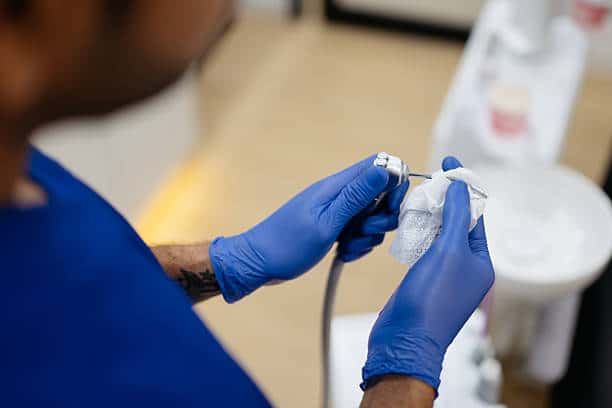
Dental suction techniques are the methods dental assistants use to remove saliva, water, and debris during treatment. Two common devices are high-volume evacuators (HVE) and low-volume saliva ejectors. Knowing how these devices differ, when each is used, and how suctioning fits into chairside teamwork is a core part of practical dental assistant training.
If you’re exploring a dental assisting career, suctioning may sound simple. In practice, it takes coordination, awareness, and guided practice. Our dental assisting program near Jacksonville teaches these chairside skills inside a working dental office. You build them step by step with experienced instructors beside you.
What Are Dental Suction Techniques, and Why Do Dental Assistants Learn Them?
Dental suctioning is the controlled removal of fluids and debris from the treatment area using dental evacuation equipment. The dental assistant usually manages it so the dentist can keep working without stopping.
Suctioning supports several goals at once:
- Keeping the treatment area visible
- Removing saliva, irrigation water, and procedure debris
- Managing moisture during restorative work
- Supporting patient comfort
- Coordinating with the dentist’s instruments and workflow
- Reducing some droplets and aerosols when high-volume evacuation is used correctly
Not every device does all of these equally well. Fluid control and aerosol reduction are separate jobs, and the sections below explain which device handles each.
How Dental Suction Supports Visibility and Moisture Control
Moisture builds up quickly during treatment. A dental handpiece sprays water to cool the tooth. Saliva keeps flowing, and rinse water adds more.
Without moisture control in dentistry, that fluid pools and blocks the dentist’s view. Good chairside assisting keeps the area clear so the dentist can see exactly where they’re working. This matters during exams, fillings, and many other treatments, which is why dental assistant suction techniques are taught early in training.
Why Suctioning Is Part of Four-Handed Dentistry
Four-handed dentistry is a team approach where the dentist and assistant work together in defined roles and positions. Suctioning is part of that system, not a different name for it.
While the dentist works, you manage fluid and coordinate with the dentist’s instruments. Timing, positioning, and clear communication keep you both from getting in each other’s way. Building strong four-handed dentistry skills helps suctioning feel like a natural part of the routine.
How Effective Suctioning Supports Patient Comfort
Patients notice when fluid pools in their mouths. It can trigger gagging or the urge to close and swallow. The cheeks, tongue, and gums are also sensitive to suction contact. Steady fluid management may reduce interruptions and help patients stay more relaxed.
Suctioning can’t guarantee a comfortable visit, though. Patients can’t speak easily during treatment. Many teams ask patients to raise a hand if they need a pause, and assistants watch for that signal.
High-Volume Evacuation (HVE): What Dental Assisting Students Need to Know
High-volume evacuation (HVE) is a suction system that removes large volumes of air, fluid, and debris from the mouth. It’s the main suction tool during many procedures. Compared with a saliva ejector, high-volume suction has a wider tip, much greater evacuation capacity, and broader clinical uses.
What Is a High-Volume Evacuator in Dentistry?
A high-volume evacuator has a few main parts:
- Evacuation tip: The wide, often angled end placed near the treatment area
- Suction handle or valve: Lets the assistant turn suction on, off, or adjust it
- Vacuum hose: Carries fluid and debris away from the mouth
- Dental evacuation system: The central vacuum that powers suction throughout the office
The central system creates the suction. The tip and valve give you control at the chair, so you can direct that suction where it’s needed.
When Is HVE Commonly Used During Dental Procedures?
Dental teams commonly use HVE during:
- Restorative treatment with rotary instruments, such as high-speed handpieces
- Procedures that produce heavy water spray
- Certain polishing and cleaning steps
- Any stage that creates larger amounts of fluid or debris
Device choice still depends on the procedure, the equipment, and the office’s clinical protocol. The dentist’s instructions guide which suction you use and when.
How HVE Helps Reduce Dental Aerosols and Splatter
Dental procedures produce three kinds of material:
- Splatter: Larger droplets that visibly land on surfaces
- Aerosols: Tiny droplets that can stay suspended in the air
- Collected fluids: Water, saliva, and debris pulled directly from the mouth
HVE positioned near the source can help reduce splatter and some aerosols. It works as one layer of a broader infection-control approach. It does not replace masks, eyewear, gloves, ventilation, hand hygiene, or other protective measures.
Why HVE Positioning Requires Clinical Awareness
Where you place the HVE tip affects how much it captures. Spray and debris start where the handpiece meets the tooth. A tip held closer to that source usually collects more than one held farther away. The goal is to capture spray without crowding the dentist’s instruments or resting on tissue.
The right angle and distance change with each tooth and procedure. That’s why positioning is taught through instructor demonstration and supervised practice, not from a written guide alone.
Saliva Ejectors: How Low-Volume Dental Suction Works
A saliva ejector is a low-volume evacuation (LVE) device that removes saliva and small amounts of fluid. It works more gently than HVE and serves a different purpose. Dental assistants need to recognize both devices because they aren’t interchangeable.
What Is a Saliva Ejector?
A saliva ejector is a thin, flexible tube with a small tip. It connects to the office’s low-volume evacuation line. Many tips can be bent to rest in a stable position, which allows continuous, light fluid removal while the team works.
When Do Dental Teams Use Saliva Ejectors?
Teams often use saliva ejectors when steady, light fluid removal is enough. Examples include some preventive visits, sealant placement, or moments when a patient produces extra saliva. The dentist decides when a saliva ejector is the right choice, based on the treatment and clinical setting.
What Are the Limitations of Low-Volume Suction?
Low-volume suction has clear limits:
- Lower evacuation capacity than HVE
- Less suited to heavy spray or debris
- Limited ability to capture aerosols
- Possible backflow under certain conditions
Backflow means previously suctioned fluid moving back toward the patient’s mouth. It can happen when patients seal their lips around the tip. Tubing positioned above the mouth or simultaneous use with HVE can also contribute.
No adverse health effects from backflow have been reported. Students still learn equipment instructions and infection-control protocols that help reduce the risk.
HVE vs. Saliva Ejector: Understanding the Differences
HVE and saliva ejectors both remove fluid, but they’re built for different jobs. Here’s how they compare.
| Attribute | High-Volume Evacuation (HVE) | Saliva Ejector |
| Main purpose | Larger-volume evacuation and fluid and debris control | Low-volume saliva and fluid management |
| Evacuation capacity | Higher | Lower |
| Common use | Procedures with substantial water spray or debris | Situations needing ongoing saliva control |
| Aerosol management | Can help reduce aerosols when used appropriately | Not a substitute for HVE aerosol control |
| Learning requirement | Positioning, coordination, safety | Placement awareness, fluid management, safety |
Which Suction Device Is Better for Managing Water and Debris?
HVE is generally better suited to large amounts of water and debris. Saliva ejectors support lighter, ongoing moisture management. Neither device is better in every situation. The right choice depends on what’s happening during that stage of treatment.
Can HVE and Saliva Ejectors Be Used During the Same Appointment?
Yes. Dental teams often use different suction at different stages of an appointment. A saliva ejector might manage saliva during one step, while HVE takes over during handpiece use. Smooth transitions depend on following the dentist’s lead and knowing the next step.
Why Dental Assisting Students Must Learn Both Types of Suction
In a real office, the dentist may simply ask for suction. Knowing each tool’s purpose and limits helps you respond quickly and correctly. That equipment knowledge is part of being ready for chairside work.
How Dental Assistants Learn Safe Suction Positioning and Chairside Coordination
Safe suction positioning comes from understanding the procedure, not memorizing one hand placement. Students build this skill by learning to read the treatment area, coordinate with the dentist, protect tissues, and communicate clearly.
Understanding the Treatment Area Before Positioning Suction
Before placing suction, you need a clear picture of what’s happening. That includes:
- Which tooth or area is being treated
- Where the dentist is working
- Which instruments are in use
- Where fluid or debris is collecting
- Which soft tissues need protection
This is where anatomy knowledge pays off. Knowing tooth names and oral structures helps you follow instructions quickly. Our guide to dental anatomy for dental assistants covers those foundations.
Maintaining Visibility Without Obstructing the Dentist
The dentist often holds a dental mirror in one hand and a handpiece in the other. Your suction tip shares that small space.
Good suction positioning removes fluid without blocking the mirror or the dentist’s line of sight. Poor instrument coordination can cloud the view or force the dentist to stop. Clear chairside visibility keeps the clinical workflow moving.
Coordinating Suction With Instrument Transfer
In many procedures, you suction with one hand and pass instruments with the other. Timing matters here. You learn to anticipate the next instrument, read the dentist’s cues, and keep suction steady during each handoff.
Recognizing instruments at a glance makes this easier. Strong dental instrument identification skills support smoother transfers.
Protecting Oral Tissues During Suctioning
A suction tip can grab the cheek, tongue, or floor of the mouth if placed carelessly. That pulling can feel uncomfortable and may irritate tissue.
Assistants learn to keep the tip where it removes fluid without resting on soft tissue. If the patient reacts, you adjust with the dentist’s direction.
Dental Assistant Ergonomics During Suctioning
Suctioning can mean holding one position for long stretches. Repetitive reaching, bent wrists, and static posture may lead to fatigue over time.
Instructors help students find neutral positions and smoother movements. There’s no single setup that works for everyone. Chair arrangements, the dentist’s preferences, and your own body all play a role.
Recognizing When Suctioning Needs to Be Adjusted
Suctioning often needs small adjustments during a procedure. Watch for:
- Fluid that isn’t clearing
- A reduced view of the treatment area
- The tip bumping instruments
- Signs that the patient is uncomfortable
When you notice these, communicate with the dentist and follow their direction. Students learn to recognize these cues with guidance from a supervising clinician.
How Suction Techniques Change Across Dental Procedures
Suction needs change from one procedure to the next. The amount of fluid, the equipment in use, and the treatment setting all affect your approach.
Suctioning During Dental Fillings and Restorative Procedures
During restorative work, your suction role shifts with each step. High-speed rotary instruments create the most water spray, so HVE stays close by to keep the tooth visible. Before materials go in, the focus moves to keeping the tooth dry. Good assistants follow that rhythm without being asked.
Suctioning During Crown and Bridge Procedures
Crown preparation also uses rotary instruments and water spray. The assistant manages fluid while coordinating retraction and instrument passing. Later steps, such as impressions and temporary crowns, follow their own protocols.
Suctioning During Oral Surgery and Tooth Extractions
Surgical procedures may involve blood, tooth fragments, and different equipment. Many offices use surgical suction tips or specialized systems for this work. These require their own training, and assistants follow the surgeon’s protocol rather than restorative habits.
Suctioning During Preventive and Pediatric Dental Appointments
Cleanings, sealants, and fluoride treatments often need lighter moisture control. With children, smaller mouths, comfort, and cooperation can affect how suction is used. Some children are fine with suction, while others need reassurance. The procedure, not age alone, guides device choice.
Infection Control and Equipment Safety When Using Dental Suction
Dental suction equipment is part of infection prevention because it carries potentially contaminated fluids away from the patient.
Why Dental Suction Equipment Requires Infection-Control Precautions
Suction tips and hoses contact saliva, blood, and debris during treatment. That makes them potentially contaminated after every patient. Assistants wear appropriate PPE, handle equipment carefully, and follow protocols for each component.
Disposable vs. Reusable Suction Tips
Some suction tips are single-use and discarded after each patient. Others are reusable and require proper cleaning and sterilization between patients. Many offices use both types, so you follow the manufacturer’s instructions for each one.
Why Dental Suction Lines Require Routine Maintenance
Evacuation lines collect debris and can develop buildup inside. Offices clean and maintain them according to manufacturer instructions and office protocols. Products and schedules vary by system, so assistants learn the routine for their office’s equipment.
Common Suction-Related Infection-Control Mistakes
Beginners learn to avoid these common errors:
- Handling contaminated equipment incorrectly
- Skipping or rushing reprocessing steps
- Assuming a saliva ejector manages aerosols like HVE
- Creating conditions that may contribute to backflow
- Overlooking PPE or standard precautions during busy moments
Common Dental Suction Mistakes Beginners Learn to Avoid
Every new assistant makes mistakes while learning dental suction techniques. That’s a normal part of training. Supervised practice helps you spot errors, understand why they matter, and correct them early.
Holding Suction in a Position That Blocks Visibility
The most common beginner issue is placing the tip where it blocks the dentist’s view. The dentist then has to pause or reposition. Guided practice builds your awareness of what the dentist needs to see.
Choosing the Wrong Suction Device for the Procedure
Using a saliva ejector when heavy spray calls for HVE leaves fluid behind. Understanding each device’s purpose helps you choose correctly and follow instructions with confidence.
Focusing on Fluid Removal but Forgetting Patient Comfort
When you’re concentrating on fluid, it’s easy to stop watching the patient. The tip may rest on tissue, or the patient may raise a hand. Instructors teach students to notice these signals and tell the dentist right away. Over time, that habit becomes automatic.
Poor Coordination Between Suctioning and Instrument Transfer
Suctioning while passing instruments takes practice. Poor timing can leave fluid pooling or slow a handoff. Repetition helps both tasks feel natural together.
Rushing Before Developing Consistent Technique
Speed comes later. Accuracy, safety, and coordination come first. Students who build steady technique usually get faster without forcing it.
How Hands-On Dental Assistant Training Builds Suctioning Skills
Dental assistant suctioning is a skill you learn by doing. Most programs follow a clear learning sequence:
- Instructor demonstration
- Equipment recognition
- Supervised practice
- Correction and feedback
- Repetition
- Integrated chairside simulation
- Clinical exposure
This progression is at the heart of hands-on dental assistant training. Each step builds confidence for the next.
Learning HVE and Saliva Ejector Equipment in a Dental Assisting Lab
Training starts with the equipment itself. You handle HVE tips, saliva ejectors, and valves, and learn how each part works. At Bartram, classes take place inside a working dental office, so you learn in a real clinical setting.
Practicing Suctioning With Simulated Dental Procedures
Next, you practice in controlled settings. Simulated procedures let you work on positioning and coordination without the pressure of treating a real patient. Mistakes become learning moments instead of problems.
Developing Suctioning Skills Through Instructor Feedback
Instructors spot issues that students can’t see in themselves. They may adjust your wrist angle, timing, or tip placement. They also coach you on communicating with the dentist.
Combining Suctioning With Four-Handed Dentistry
Combining skills usually comes after each one feels steady on its own. Once suctioning no longer needs your full attention, you practice it within four-handed dentistry, alongside instrument transfer and patient positioning. Understanding how four-handed dentistry works in practice shows you where suctioning fits. That’s when chairside work starts to feel like teamwork.
Applying Chairside Skills During Dental Assistant Externships
Externships move your practice into real dental office workflows. Students apply chairside skills under supervision, based on their training and placement. Each office is different, so the procedures you see will vary.
Why Employers Value Dental Assistants Who Understand Suctioning and Moisture Control
Employers look for new assistants who can support the dentist soon after orientation. Suctioning is one of the clearest places that readiness shows. It draws on equipment knowledge, communication, patient awareness, infection control, and the ability to adapt.
Suctioning Skills Support Efficient Chairside Teamwork
A prepared assistant helps procedures flow with fewer interruptions. The dentist doesn’t have to stop and clear fluid or wait for an instrument. That steady support helps the whole team.
Clinical Awareness Matters More Than Simply Holding Equipment
Anyone can hold a suction tip. Clinical awareness means knowing where to place it, when to adjust it, and why. That understanding turns basic equipment use into dependable chairside assisting skills.
Dental Offices May Use Different Suction Systems and Protocols
Every office has its own equipment and preferences. Even well-trained graduates need office-specific orientation. Training gives you the foundation, and each new team helps you adapt it.
What to Look for in Hands-On Dental Assistant Training in Jacksonville, FL
If you’re comparing programs in Jacksonville or elsewhere in Northeast Florida, ask how suctioning is taught. A strong program treats it as a practical clinical skill, not just a textbook definition. These questions can help.
Does the Program Teach Both HVE and Saliva Ejector Fundamentals?
Ask whether students learn to recognize both devices and use each one in practice. A clear answer should cover when each device is used, not just what it’s called.
Will Students Practice Suctioning During Chairside Simulations?
Ask how much hands-on time students get. Look for supervised repetition and instructor correction, not only observation.
Does Training Connect Suctioning With Four-Handed Dentistry?
Equipment knowledge on its own isn’t enough. A good program teaches suctioning alongside instrument transfer, patient positioning, and teamwork.
How Does the Program Prepare Students for Real Dental Office Workflows?
Ask how the program builds communication, safety habits, and real-office readiness. Externship opportunities can help bridge the gap between practice and employment.
How Does Bartram’s 10-Week Dental Assisting Program Teach Chairside Skills?
Our program introduces chairside skills early. Week 2 focuses on four-handed dentistry, including instrument transfer, isolation techniques, suctioning with HVE, and patient positioning.
Learning these skills together shows you how they connect during real procedures. Classes meet at our school in St. Johns County on Saturdays, with summer sessions on Fridays. You can review the full program details and session dates to see if the schedule works for you.
Frequently Asked Questions About Dental Suction Techniques
What is HVE in dental assisting?
HVE stands for high-volume evacuation. It’s a suction system that removes large amounts of fluid, debris, and air from the mouth during treatment. Dental assistants use it to keep the treatment area clear and visible for the dentist.
What is the difference between HVE and a saliva ejector?
HVE has much higher suction capacity and handles heavy water spray and debris. A saliva ejector is a low-volume device for ongoing saliva control. HVE can help reduce aerosols when used correctly, while a saliva ejector isn’t designed for that role.
Do dental assistants use suction during every dental procedure?
No. Suction needs vary by treatment and clinical protocol. Some exams need little or no suction. Procedures with water spray or debris often use HVE. The dentist and office protocols determine what each procedure requires. Even within one visit, suction needs can change from one step to the next.
Is dental suctioning difficult to learn?
Suctioning takes practice, mostly for coordination and positioning. Holding the tip steady while watching the dentist can feel awkward at first. Most students find it becomes natural with repetition. Instructors break the skill into small steps and give feedback until your technique feels steady.
Can a saliva ejector replace high-volume suction?
No. The two devices are designed for different amounts of fluid. A saliva ejector also isn’t built for aerosol control. Many procedures use one at an early stage and HVE at another. That’s why dental assistants learn both devices and when each one fits.
Why is HVE important during restorative dentistry?
Restorative procedures often use high-speed handpieces that spray water. HVE removes that water and debris quickly, keeping the tooth visible and the area controlled. When positioned correctly, it also helps reduce splatter and some aerosols.
Do dental assistant schools teach suctioning techniques?
Many hands-on programs include suctioning as part of chairside training. Curricula vary, so ask each school how and when it’s taught, and how much supervised practice students get. Look for programs that teach suctioning alongside instrument transfer and patient positioning, not as a separate lesson.
Can dental assistants perform suctioning in Florida?
Yes, within specific limits. Florida’s rule on tasks delegable to dental assistants includes evacuation of debris, excluding endodontic irrigation. Assistants need on-the-job training and must work under a dentist’s indirect supervision. Our guide to Florida dental assistant requirements explains the broader picture.
Do beginners need to know how to use HVE before dental assistant school?
No. Beginner-focused programs are designed to introduce clinical equipment and skills during training. You’ll learn what HVE is, how it works, and how to use it with guidance. Bartram’s program is open to applicants with a high school diploma or GED, following a personal interview.
Learn Dental Suction and Chairside Skills at Bartram Dental Assisting School in Jacksonville, FL
Understanding suction equipment is a good start, but confidence comes from guided practice. Knowing HVE and saliva ejectors leads to better coordination. That coordination supports four-handed dentistry. Hands-on training brings these skills together so you’re prepared to join a dental team. Practicing dental suction techniques alongside other chairside skills gives you a stronger foundation for your first dental assisting role.
Our 10-week dental assisting program introduces suctioning, isolation, and four-handed dentistry in the Jacksonville area. You can explore the 10-week dental assisting program to see what each week covers.
If you’re still deciding whether dental assisting is right for you, our admissions team can answer questions about upcoming session dates. When you feel ready, you can start your dental assisting application online.

